Alec N. Delconte
AssociateatMarshall Dennehey
Philadelphia, PA
Practicing consumer in Philadelphia since 2021.
- 5+
- Years practicing
- 3
- Bar admissions
Practices in
Are you Alec N. Delconte?
This profile was built from public bar records and is still unclaimed. Claim it free to control your photo, bio, and fees — and get client inquiries sent straight to you.
Quick answer
Alec N. Delconte is an associate based in Philadelphia, PA. The practice focuses on Consumer, Insurance, and Litigation. Alec has over 5 years of legal experience. Currently practicing at Marshall Dennehey.
- Based in
- Philadelphia, PA
- Experience
- over 5 years
- Known for
- Consumer · Insurance · Litigation
- Handles Consumer, Insurance, and Litigation matters from Philadelphia, PA.
- Over 5 years of practice as a licensed attorney.
About Alec N. Delconte: Alec N. Delconte is an associate based in Philadelphia, PA. The practice focuses on Consumer, Insurance, and Litigation. Alec has over 5 years of legal experience. Currently practicing at Marshall Dennehey.
Areas of practice
Practice focus
Alec N. Delconte represents clients in Philadelphia, Pennsylvania across the following areas of law. Each area links to other verified attorneys with the same focus.
Biography
About Alec N. Delconte
Alec is a member of the Professional Liability Department and focuses his practice on representing insurers in both pre-litigation consultation and the defense of first-party and bad faith lawsuits.
When engaged prior to litigation, Alec is prepared to provide insurers legal guidance and support during the claim handling process in order to ensure appropriate and effective outcomes. He has experience managing SIU investigations, conducting examinations under oath, and assisting with coverage analyses and opinions. In the event that litigation ensues, Alec is experienced in defending insurance companies in lawsuits involving breach of contract, bad faith, and a variety of other extra-contractual claims in both Pennsylvania and federal courts.
Alec earned his Juris Doctor, cum laude, from Delaware Law School in 2021. Throughout law school, Alec was recognized on the Dean's List and served as a Bluebook Editor for the Widener Law Review. In his final year, Alec served in the chambers of the Honorable Jack A. Panella of the Superior Court of Pennsylvania, where he engaged in the appellate resolution of civil matters.
Speaking Engagements
•Condominium Conundrum (Acts, Liability, & HO6 and HOA master policies), Pennsylvania Association of Mutual Insurance Companies (PAMIC), Lancaster, PA, April 7-8, 2026
•Untying Tangled Titles - How Property Deed Fraud Drives Costs and Indemnity, International Association of Special Investigation Units (IASIU) 2025 Fraud Conference, Denver, CO, August 27, 2025
•Epidurals, Facets and Ablations: Investigating Common Interventional Pain Management Procedures, Pennsylvania Auto Crime Investigators Association (PACIA), Philadelphia, PA, October 4, 2024
•Untying Tangled Titles - How Property Insurance Drives Fraud, 2024 Pennsylvania Insurance Fraud Prevention Authority (IFPA) Conference, Hershey, PA, April 12, 2024
Published Works
•' Efficient Proximate Cause Rule Clarified: Coverage Hinges on the Dominant Peril ' The Legal Intelligencer, April 9, 2026
•'Choice of Law in Coverage Disputes: What Happens When the Policy, the Loss and the Parties Span State Lines?' The Legal Intelligencer's Insurance Law Supplement, August 19, 2025
Thought Leadership
The Legal Intelligencer
Efficient Proximate Cause Rule Clarified: Coverage Hinges on the Dominant Peril
April 9, 2026
Legal Updates for Insurance Services
Court Clarifies Efficient Proximate Cause Rule: Covered Peril Must Be the Dominant Cause
February 24, 2026
A scenario all too familiar in the world of property insurance claims arises when an insured seeks a full roof replacement after their roof is beyond its useful life. The roof is visibly deteriorated, and a minor wind event becomes the proverbial “straw that breaks the camel’s back.” This raises a central coverage question: was the loss caused by a covered peril-wind-mandating payment for a new roof? Or, was the loss caused by excluded conditions-deterioration and wear and tear-which insurance does not cover? The answer to this question often determines whether the insurer owes tens of thousands of dollars, or nothing at all.Recently, in Stella Property Development and Event Production, LLC v. Auto-Owners Insurance Company, 2026 WL 221489 (W.D. Pa. 2026), the United States District Court for the Western District of Pennsylvania addressed three issues that are often central to these types of claims: Pennsylvania’s “causation” analysis, the scope of ensuing loss clauses, and the evidentiary threshold for maintaining statutory bad faith claims.Following a windstorm, Stella submitted an insurance claim, alleging extensive roof damage. Auto-Owners had issued Stella a commercial property policy, covering a historic building formerly used as a church. As typical, the policy insured against “direct physical loss or damage” to the structure subject to various exclusions. After multiple inspections, Auto-Owners concluded that the roof had not been damaged by a single wind event, but rather, was in a deteriorated state due to age, decay, and wear and tear. Accordingly, Auto-Owners denied coverage pursuant to the policy’s wear and tear and maintenance exclusions. Stella filed suit, asserting claims for breach of contract and statutory bad faith. The parties ultimately filed cross-motions for summary judgment, prompting a 32-page Memorandum Opinion. CausationThe “entire premise” of Stella’s argument was that, even if the roof manifested wear and tear, the cited exclusions did not bar coverage under Pennsylvania’s “efficient proximate cause” rule. However, Stella also invoked what other jurisdictions refer to as the “concurrent causation” doctrine. Accordingly, prior to addressing Stella’s argument, the District Court clarified the difference between these theories. “Efficient proximate cause” is framed in causal sequence, and asks which peril was the “triggering” cause. It requires coverage where a covered cause of loss “sets into motion the chain of events” culminating in the loss, even if excluded causes contributed along the way. “Concurrent causation” is applied where covered and excluded perils operate as independent, concurrent causes of the same loss. It permits coverage so long as the covered peril is a “concurrent proximate cause of the injuries.”The District Court then explained, regardless of labels, “courts often collapse the analysis into a single inquiry focused on identifying the proximate or predominant cause of the loss.”Looking to Trexler Lumber Co. v. Allemannia Fire Ins. Co. of Pittsburgh for guidance, the District Court predicted that the Pennsylvania Supreme Court would apply the efficient proximate cause doctrine in a predominant-cause sense. Under that framework, Stella’s claim was not defeated merely because excluded perils contributed to the loss, but Stella was required to adduce evidence that the covered peril was the “dominant and efficient” cause of the damage, as opposed to merely a remote or incidental cause. Ensuing Loss ClausesThe policy’s wear and tear and maintenance exclusions each contained ensuing loss provisions, albeit with slightly different wording. Despite the differing language, the District Court’s interpretation was consistent: the ensuing loss clauses applied only where the excluded condition itself “results in” a new, distinct covered peril. While inadequate maintenance and/or wear and tear may affect how a roof performs during a windstorm, neither “results in” a windstorm.Accordingly, the District Court made clear that ensuing loss clauses are to be strictly construed, and do not automatically trigger coverage when excluded conditions contribute to the loss. Rather, coverage is only restored when the excluded conditions actually give rise to a separate covered peril. Bad Faith ClaimFinally, because Auto-Owners’ coverage determination was grounded in a thorough investigation and well-supported expert opinions, Stella’s bad faith claim failed as a matter of law, and was dismissed.In coming to its coverage decision, Auto-Owners’ relied on detailed investigative materials, multiple inspections, and expert assessments. Those findings all attributed the roof damage to decay, wear and tear, and inadequate maintenance, thereby providing Auto-Owners with an objectively reasonable basis for concluding that a covered windstorm was not the dominant and efficient cause of the loss. TakeawayThis decision provides helpful framework as to how Pennsylvania courts are likely to assess causation in these claims, regardless of labels. Insurers should take heed of this as they adjust claims that involve multiple perils.Legal Updates for Insurance Services - February 24, 2026, has been prepared for our readers by Marshall Dennehey. It is solely intended to provide information on recent legal developments and is not intended to provide legal advice for a specific situation or to create an attorney-client relationship. We welcome the opportunity to provide such legal assistance as you require on this and other subjects. If you receive the alerts in error, please contact MeDeSatnick@MDWCG.com. ATTORNEY ADVERTISING pursuant to New York RPC 7.1. 2026 Marshall Dennehey, P.C. All Rights Reserved.
Events
Speaking Engagement
2026 Pennsylvania Association of Mutual Insurance Companies (PAMIC) Claims Summit
April 8, 2026
Jeffrey G. Rapattoni, James H. Cole, Alec N. DelConte, and Allison L. Krupp
Credentials
Education
Widener University Delaware Law School
J.D. · 2021
Widener University
B.A. · 2016
Jurisdictions
Bar admissions
U.S. District Court
2024 · ACTIVE
U.S. District Court
2023 · ACTIVE
Pennsylvania
2021 · ACTIVE
Affiliations
Professional memberships
Chester County Bar Association Pennsylvania Bar Association Philadelphia bar association
membership
Locations
Office locations
Client feedback
Client reviews
No reviews yet
Only verified clients who have consulted with Alec N. Delconte can leave a review.
Schedule your consultationFrequently asked
Common questions
What areas of law does Alec N. Delconte practice?
Alec N. Delconte focuses on Consumer, Insurance, Litigation, and Real Estate.
Where is Alec N. Delconte located?
Alec N. Delconte primarily serves clients in Philadelphia, Pennsylvania, with an office at 2000 Market Street, Suite 2300.
How experienced is Alec N. Delconte?
Alec N. Delconte has 5 years of legal practice, having been licensed since 2021.
Is Alec N. Delconte a verified attorney?
Alec N. Delconte's profile is listed but has not yet been claimed by the attorney. Verification status is pending.
How can I schedule a consultation with Alec N. Delconte?
You can book a consultation through LawyersListed directly from this page. Initial outreach can also be made by phone at 215-575-2675.
More counsel
Other top-rated consumer attorneys in Pennsylvania
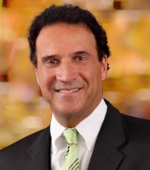
Jerry Robert Knafo
Allentown, Pennsylvania
5.0· 60

Jennifer Gilliland Vanasdale Esquire
Cranberry Township, Pennsylvania
5.0· 47

Gary Green
Philadelphia, Pennsylvania
5.0· 47

Edward Robert Kennett
Lancaster, Pennsylvania
5.0· 39

Gary T. Vanasdale Esquire
Cranberry Township, Pennsylvania
5.0· 36

Michael J. Foley
Scranton, Pennsylvania
5.0· 26