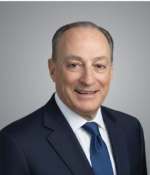
Amara Benitez Rodriguez
AssociateatMarshall Dennehey
Tampa, FL
Practicing construction in Tampa since 2018.
- 8+
- Years practicing
- 2
- Bar admissions
Practices in
Are you Amara Benitez Rodriguez?
This profile was built from public bar records and is still unclaimed. Claim it free to control your photo, bio, and fees — and get client inquiries sent straight to you.
Quick answer
Amara Benitez Rodriguez is an associate based in Tampa, FL. The practice focuses on Construction, Consumer, and General. Amara has over 8 years of legal experience. Currently practicing at Marshall Dennehey.
- Based in
- Tampa, FL
- Experience
- over 8 years
- Known for
- Construction · Consumer · General
- Handles Construction, Consumer, and General matters from Tampa, FL.
- Over 8 years of practice as a licensed attorney.
About Amara Benitez Rodriguez: Amara Benitez Rodriguez is an associate based in Tampa, FL. The practice focuses on Construction, Consumer, and General. Amara has over 8 years of legal experience. Currently practicing at Marshall Dennehey.
Areas of practice
Practice focus
Amara Benitez Rodriguez represents clients in Tampa, Florida across the following areas of law. Each area links to other verified attorneys with the same focus.
Biography
About Amara Benitez Rodriguez
Amara is an associate in the Casualty Department where she represents defendants in third-party insurance defense matters concerning negligence, automobile liability, premises liability, construction defect, personal injury and defamation/ libel. Additionally, she has experience handling litigation involving insurance fraud and Special Investigation Unit (SIU) with particular emphasis on large loss fraud and medical provider fraud. Amara has practiced before both federal and state court judges.
Amara received her juris doctor, cum laude, with a concentration in advocacy from Stetson University College of Law. While in law school, Amara was a member of the nation’s top ranked advocacy program as a member of the Trial Team. During her two years on the team, Amara learned the fundamental skills for advocating in a jury trial and is proud to be a two-time regional champion of the American Association for Justice’s Mock Trial Competition. Her exceptional skills in oral advocacy earned her the invitation for induction into The Order of the Barristers in 2018. Amara was also a member of the Student Bar Association, where she served as vice-president, and Phi Delta Phi.
During law school, Amara worked as a summer associate for the Department of the Navy’s Office of the General Counsel’s Naval Litigation Office. In this role, Amara worked out of the Pentagon and Washington DC Naval Yard defending the United States Navy and Marine Corp in matters concerning breach of military contracts, employment law and environmental law. Amara also interned at the Department of Veterans Affairs Office of General Counsel and the Veterans Law Institute at Stetson. Amara was selected to contribute to an Amicus Brief on Veterans’ Due Process rights to the U.S. Court of Appeals for Veterans Claims due to her dedication to Veterans’ Advocacy.
Prior to law school, Amara attended the University of South Florida, where she earned a B.S. in Health Sciences with concentrations in Biological Health and Mental and Behavioral Health.
Amara is admitted to practice in the State of Florida and Middle District of Florida.
Honors & Awards
•Florida Super Lawyers, Rising Stars (2024-2025)
Classes / Seminars Taught
•A Proposal for Settlement for All Seasons: Effective Use of the PFS in Florida’s New Legal Landscape, Florida Liability Claims Conference, Lake Buena Visit, FL, June 18, 2025
Thought Leadership
Defense Digest
Plaintiff Does Not Have to Pay for It and Neither Should You: Preventing Plaintiff’s Introduction of Past Medical Expenses that Have Been Adjusted and/or Written Off by Collateral Source Payments
June 1, 2023
Key Points:Evidence of past medical bill charges that have been paid, adjusted, or written off are not relevant. Florida case law establishes that Medicare/Medicaid recipients are precluded from showing evidence of medical damages above the Medicare/Medicaid subrogation/lien amount.The principles for limiting evidence of medical damages that have been paid, adjusted, or written off should apply regardless of the source of payment.It is the eve of trial, and evidentiary issues are being evaluated. For attorneys trying personal injury cases, one issue that must be evaluated involves the damages that the plaintiff will be able to present to the jury. Plaintiff’s counsel will inevitably try to present every single last penny charged by medical providers, irrespective of any payments, adjustments, or write-offs. On the other hand, defense counsel is undoubtedly crunching the numbers, trying to determine what bills should be excluded. Everyone knows that the decisions on this issue will have a significant impact on the verdict. Everyone understands what is on the line. Until recently, Florida plaintiffs essentially had free reign to present to the jury medical bills and charges that were already paid, already adjusted, or even written off. In such a scenario, a jury would award a verdict based on numbers that were more than the amount paid by the insurer, Medicare/Medicaid, or any collateral source, and the verdict amount would be set-off after the fact. However, in 2022, the Florida Supreme Court’s decision in Dial v. Calusa Palms Master Ass’n, Inc., 337 So. 3d 1229, 1232 (Fla. 2022) changed the playing field. The court established that it is proper to prevent the plaintiff from presenting the full charges for past medical expenses that Medicare already paid or were adjusted or written off based on a Medicare/Medicaid payment. The holding in Dial is founded upon the principle that: [T]he touchstone for admissibility of medical bills under Florida law is an individual’s obligation to pay them... [w]here a Plaintiff is not obligated to pay the full amount of the medical bills, the full amount of the medical bills becomes irrelevant and should be excluded. Sensini v. MTD Sw. Inc., 2019 WL 2015957, at *1 (M.D. Fla. Jan 7, 2019). The court explained that Florida Statute 768.76 prohibits any set-off of Medicare/Medicaid benefits and, therefore, a post-verdict set-off for Medicare/Medicaid recipients is not an option. And so, when a plaintiff is a Medicare/Medicaid recipient, defense attorneys can now successfully argue:The medical providers are prohibited by federal and/or state statute from seeking additional payment after accepting payment from Medicare/Medicaid. The plaintiff will only ever be liable for the Medicare/Medicaid subrogation/lien amount that corresponds to the payments actually made to the medical providers.The difference between the initial gross charge and the payment amount is not relevant to any issue because the plaintiff will never have to pay that difference and the provider cannot seek payment of that difference from any person or entity. The plaintiff should be precluded from presenting any evidence of the full charges submitted by providers and should only be allowed to present evidence of the amount Medicare has paid and which the plaintiff may ultimately be responsible for paying.Defense counsel should not be timid in their quest to push for additional limitations on evidence of payments, adjustments, and write-offs that medical providers accept from other collateral sources. Florida policy is clear that “a Plaintiff... is not entitled to recover compensatory damages in excess of the amount which represents the loss actually inflicted by the action of the Defendant.” Dial, 337 So. 3d at 1232. This is a fundamental principle for the recovery of compensatory damages and should apply regardless of the source of the payment. For cases filed after March 24, 2023, defense counsel will rely on House Bill 837, “Civil Remedies,” which establishes that the evidence offered to prove the amount of damages for past medical bills that have already been satisfied is limited to the evidence of the amount actually paid, regardless of the source of payment. However, for all those very-many cases filed before this monumental tort reform, defense counsel should consider the following:To be admissible, evidence must be relevant; it must tend to prove or disprove a material fact. Charles W. Ehrhardt, Florida Evidence 402.1, at 222 (2021 ed.). The inflated gross amount of a charge is irrelevant as a proper measure of compensatory damages because it was subsequently paid by the plaintiff’s collateral source or adjusted and/or written off. The original charge does not tend to prove or disprove that the claimant has suffered any loss by reason of the charge. Dial, 337 So. 3d at 1232 (citing Thyssenkrupp Elevator Corp. v. Lasky, 868 So. 2d 547, 551 (Fla. 4th DCA 2003)). Therefore, the plaintiff should be limited to presenting evidence of the amount actually paid. Whether Florida’s courts will take up the issue of limiting evidence of past medical bills, regardless of the source of payment, for cases filed before House Bill 837 is unknown...after all, the days of it being an issue appear to be numbered. But, Florida courts are inundated with cases that are not subject to House Bill 837, and defense attorneys need to gear up with every tool available to advocate for their clients and prevent excessive awards.*Amara is an associate in our Tampa, Florida, office. She can be reached at 813.898.1820 AXRodriguez@mdwcg.com. Defense Digest, Vol. 29, No. 2, June 2023, is prepared by Marshall Dennehey to provide information on recent legal developments of interest to our readers. This publication is not intended to provide legal advice for a specific situation or to create an attorney-client relationship. ATTORNEY ADVERTISING pursuant to New York RPC 7.1. 2023 Marshall Dennehey. All Rights Reserved. This article may not be reprinted without the express written permission of our firm. For reprints, contact tamontemuro@mdwcg.com.
News
Eight Marshall Dennehey Attorneys Selected to the 2025 Florida Super Lawyers & Florida Rising Stars Lists
June 26, 2025
Five Marshall Dennehey Attorneys Selected to the 2024 Florida Super Lawyers & Florida Rising Stars Lists
June 27, 2024
Credentials
Education
Stetson University College of Law, Gulfport, FL
J.D. Honors · 2018
University of South Florida, Tampa, FL
B.S. Major · 2014
Jurisdictions
Bar admissions
U.S. District Court
2019 · ACTIVE
Florida
2018 · ACTIVE
Locations
Office locations
Client feedback
Client reviews
No reviews yet
Only verified clients who have consulted with Amara Benitez Rodriguez can leave a review.
Schedule your consultationFrequently asked
Common questions
What areas of law does Amara Benitez Rodriguez practice?
Amara Benitez Rodriguez focuses on Construction, Consumer, and General.
Where is Amara Benitez Rodriguez located?
Amara Benitez Rodriguez primarily serves clients in Tampa, Florida, with an office at 201 E. Kennedy Boulevard, Suite 1100.
How experienced is Amara Benitez Rodriguez?
Amara Benitez Rodriguez has 8 years of legal practice, having been licensed since 2018.
Is Amara Benitez Rodriguez a verified attorney?
Amara Benitez Rodriguez's profile is listed but has not yet been claimed by the attorney. Verification status is pending.
How can I schedule a consultation with Amara Benitez Rodriguez?
You can book a consultation through LawyersListed directly from this page. Initial outreach can also be made by phone at 813-898-1820.
More counsel