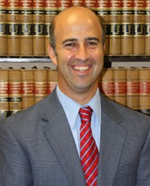
Jordan L. Mazzoni
AssociateatMarshall Dennehey
Moosic, PA
Practicing civil rights in Moosic since 2017.
- 9+
- Years practicing
- 1
- Bar admission
Practices in
Are you Jordan L. Mazzoni?
This profile was built from public bar records and is still unclaimed. Claim it free to control your photo, bio, and fees — and get client inquiries sent straight to you.
Quick answer
Jordan L. Mazzoni is an associate based in Moosic, PA. The practice focuses on Civil Rights, Consumer, and Employment. Jordan has over 9 years of legal experience. Currently practicing at Marshall Dennehey.
- Based in
- Moosic, PA
- Experience
- over 9 years
- Known for
- Civil Rights · Consumer · Employment
- Handles Civil Rights, Consumer, and Employment matters from Moosic, PA.
- Over 9 years of practice as a licensed attorney.
About Jordan L. Mazzoni: Jordan L. Mazzoni is an associate based in Moosic, PA. The practice focuses on Civil Rights, Consumer, and Employment. Jordan has over 9 years of legal experience. Currently practicing at Marshall Dennehey.
Areas of practice
Practice focus
Jordan L. Mazzoni represents clients in Moosic, Pennsylvania across the following areas of law. Each area links to other verified attorneys with the same focus.
Biography
About Jordan L. Mazzoni
Jordan is a member of the firm’s Professional Liability Department, where she represents public entities, employers, self-insured businesses, insurers, and licensed professionals in a broad range of high-exposure litigation and professional liability matters. Her practice is centered on strategic risk management, efficient resolution of disputes, and delivering practical counsel tailored to each client’s operational and legal needs.
Jordan’s Public Entity and Civil Rights practice includes the defense of municipalities, police departments, school districts, zoning officials, and public agencies in complex litigation involving constitutional claims, civil rights allegations, use of force claims, premises liability, and governmental liability issues. She regularly represents public-sector clients in matters arising under Section 1983 and other state and federal statutes, while navigating the unique procedural and immunity defenses available to governmental entities and officials.
In her Employment Law practice, Jordan defends employers against claims involving discrimination, retaliation, harassment, hostile work environment allegations, whistleblower claims, wrongful termination, and sexual assault allegations. She works closely with employers to assess litigation exposure, develop defense strategies, and address sensitive workplace matters with discretion and practical business insight.
Jordan also maintains active First-Party Property, Insurance Coverage, and Liquor Liability Defense practices. She represents insurers in coverage disputes, bad faith litigation, fraud investigations, and Special Investigations Unit (SIU) matters, including the analysis of complex insurance policies and advising carriers on coverage obligations. In her Liquor Liability Defense practice, Jordan represents bars, restaurants, taverns, distributors, and hospitality businesses in dram shop and liquor liability claims involving personal injury, assault, intoxication-related incidents, and wrongful death allegations. She works closely with insureds and carriers to evaluate exposure, develop defense strategies, and navigate the unique statutory and regulatory issues impacting licensed establishments.
Prior to joining Marshall Dennehey, Jordan served as an Assistant District Attorney in the Lackawanna County District Attorney's Office, where she prosecuted criminal matters with a concentration in narcotics-related offenses as a member of the Narcotics Unit.
Jordan earned her Juris Doctor from Widener University Commonwealth Law School, where she was an active member of the Student Bar Association. She received her bachelor’s degree in Liberal Studies, with concentrations in pre-medicine and pre-law, from University of Scranton.
Honors & Awards
•Pennsylvania Super Lawyers Rising Star (2024-2026)
Results
Successful Defense of Employer Alleged to Have Violated the Pennsylvania Medical Marijuana Act
The plaintiff sought employment as a fork lift operator in a manufacturing facility. He was extended a conditional offer of employment, contingent on passing a pre-employment drug test. His drug test showed a positive indication for the presence of marijuana, and his offer was rescinded. The plaintiff claimed that he notified the facility that he held a valid Medical Marijuana Identification Card, yet our client still rescinded its offer in violation of the Pennsylvania Medical Marijuana Act. The Act prohibits an employer from refusing to hire a person solely on the basis of that person’s status as a certified medical marijuana user. In response to the complaint, we filed preliminary objections arguing that the employment offer was expressly contingent upon passing a drug test. We also argued that fork lift operation is, by its very nature, an inherently dangerous job that, if done carelessly or under the influence of a narcotic, could result in injury or death to the plaintiff or others on the premises. The court held that the Medical Marijuana Act’s provisions do not require an employer to hire a medical marijuana user as a forklift operator and taking on a substantial risk of liability for injury to persons. Additionally, the court found that a medical marijuana user does not have a right to be hired by a prospective employer who, prior to such hiring, determines that the position for which the prospective employee would be hired would require his or her performance of tasks an employer deems life-threatening to the employee or any of its employees. The demurer was sustained, and the complaint was dismissed.
Thought Leadership
Case Law Alerts
Third Circuit Broadens CHRIA’s Scope in Pennsylvania Employment Law
April 1, 2026
The Third Circuit clarified the scope of Pennsylvania’s Criminal History Record Information Act (CHRIA), holding that the statute applies even when an employer learns of a criminal conviction directly from the job applicant.Plaintiff Rodney Phath applied for a truck driver position with Central Transport and received an interview because he had relevant experience, appeared to be a good candidate with a commercial driver’s license, and had federal clearance to access secure ports.During the hiring process, Central Transport said it would check his criminal record, so Phath voluntarily disclosed a 15-year-old armed robbery conviction for which he spent six years in prison. The employer immediately rejected his application based on that conviction. Phath sued, alleging violations of CHRIA, which limits how employers may consider history in hiring decisions. The district court dismissed the case, reasoning that CHRIA did not apply because the employer learned of the conviction from the applicant rather than from the state.Pennsylvania's Criminal History Record Information Act limits disclosure and use of “criminal history record information.” 18 Pa. Cons. Stat. 9101-9183. That includes “[i]nformation collected by criminal justice agencies” about a person's description, arrests, indictments, convictions, and the like, and prospective employers may request that information from state agencies. 9102, 9113(e), 9121(b), 9125.The issue is whether the Act covered the plaintiff’s own disclosure. When an employer is in receipt of the information which is part of an employment applicant’s criminal history record information file, the employer may use the applicant’s prior convictions for the purpose of deciding whether or not to hire the applicant 9125(a); but employers may use those convictions “only to the extent to which they relate to the applicant’s suitability” for the job. 91125(b). If the employer rejects the applicant because of the criminal history information, it must give the applicant written notice of that decision. 9125(c).The plaintiff alleged violations of subsections (b) and (c), but the dispute was over subsection (a), as Central Transport had not attempted to show that the plaintiff’s conviction made him unsuitable to drive their trucks, nor that they notified him of this rejection in writing. Central Transport argued the Act did not apply because it acquired the information from plaintiff, not from a state agency. The Third Circuit rejected this argument and reversed, holding that CHRIA applies whenever an employer is in receipt of criminal history information that is part of an applicant’s criminal history record, regardless of the source of that information.
Case Law Alerts
Court Dismisses Inmate’s 1983 Civil Rights Complaint as Time-Barred and Legally Deficient
October 1, 2025
The plaintiff, Javier Gomez, an inmate at SCI-Coal Township, brought a civil rights action under 42 U.S.C. 1983. Gomez alleged that on July 14, 2022, a fellow inmate, Higgin, assaulted him. He also named several unidentified correctional and medical staff as defendants for failing to protect him and for deliberate indifference to his medical needs. Gomez filed a motion to proceed in forma pauperis. The court conducted a preliminary screening under 28 U.S.C. 1915A and 1915(e)(2), as well as 42 U.S.C. 1997e(c), applying the same standard as a Rule 12(b)(6) motion to dismiss, requiring a complaint to state a plausible claim supported by factual allegations (Bell Atlantic Corp. v. Twombly, 550 U.S. 544 (2007); Ashcroft v. Iqbal, 556 U.S. 662 (2009)). Gomez’s pro se complaint was liberally construed (Erickson v. Pardus, 551 U.S. 89 (2007)).The court found that claims against fellow inmate Higgin were legally deficient because a 1983 defendant must be a person acting under color of state law, and fellow inmates do not qualify as such (West v. Atkins, 487 U.S. 42 (1988)). Additionally, Gomez’s claims were time-barred as the applicable statute of limitations for 1983 claims in Pennsylvania is two years, and Gomez filed suit nearly three years after the alleged assault (42 Pa. Cons. Stat. 5524(2); Wallace v. Kato, 549 U.S. 384 (2007)). Regarding the John and Jane Doe defendants, Gomez failed to allege any specific facts showing that correctional or medical staff were deliberately indifferent to a substantial risk of harm or that they personally participated in any constitutional violation, as required to state a claim (Farmer v. Brennan, 511 U.S. 825 (1970); Rouse v. Plantier, 182 F.3d 192 (3d Cir. 1999)). The allegation that inmate Higgin displayed “abrasive/aggressive behavior” was insufficient to establish a substantial risk of serious harm or deliberate indifference by prison officials. The court further explained that failure to protect claims require proof that officials knew of and disregarded an excessive risk to inmate safety. Gomez did not allege any prior violent history between himself and Higgin, or any facts suggesting that prison staff had actual knowledge of a specific risk, making the claim speculative and insufficient under controlling precedent. Conclusory allegations without factual support were not entitled to be accepted as true.As a result, the court granted Gomez leave to proceed in forma pauperis, but dismissed his complaint for failure to state a claim under 28 U.S.C. 1915(e)(2)(B)(ii), 1915A(b)(1) and 42 U.S.C. 1997e(c)(1). Given the statute of limitations bar and numerous pleading deficiencies, the court found that an amendment to his compliant would be futile, and denied leave to amend. This decision highlights the importance of timely filing, naming appropriate defendants who act under the color of state law, and providing factual allegations sufficient to state plausible constitutional claims in prisoner civil rights actions. Case Law Alerts, 4th Quarter, October 2025 is prepared by Marshall Dennehey to provide information on recent developments of interest to our readers. This publication is not intended to provide legal advice for a specific situation or to create an attorney-client relationship. Copyright 2025 Marshall Dennehey, all rights reserved. This article may not be reprinted without the express written permission of our firm.
News
Marshall Dennehey Announces 2026 Pennsylvania Super Lawyers and Rising Stars Honorees
May 22, 2026
Marshall Dennehey Announces 2025 Pennsylvania Super Lawyers and Rising Stars
May 22, 2025
Credentials
Education
Widener University Commonwealth Law School
J.D. · 2017
University of Scranton
B.S. · 2013
Jurisdictions
Bar admissions
Pennsylvania
2017 · ACTIVE
Affiliations
Professional memberships
Associations & Memberships •Lackawanna County Bar Association, Young Lawyers Division, Board Member
membership
Locations
Office locations
Client feedback
Client reviews
No reviews yet
Only verified clients who have consulted with Jordan L. Mazzoni can leave a review.
Schedule your consultationFrequently asked
Common questions
What areas of law does Jordan L. Mazzoni practice?
Jordan L. Mazzoni focuses on Civil Rights, Consumer, Employment, General, and Real Estate.
Where is Jordan L. Mazzoni located?
Jordan L. Mazzoni primarily serves clients in Moosic, Pennsylvania, with an office at 50 Glenmaura National Boulevard.
How experienced is Jordan L. Mazzoni?
Jordan L. Mazzoni has 9 years of legal practice, having been licensed since 2017.
Is Jordan L. Mazzoni a verified attorney?
Jordan L. Mazzoni's profile is listed but has not yet been claimed by the attorney. Verification status is pending.
How can I schedule a consultation with Jordan L. Mazzoni?
You can book a consultation through LawyersListed directly from this page. Initial outreach can also be made by phone at 570-496-4623.
More counsel