
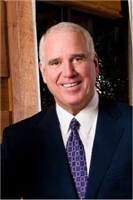
Michael J. Bidart, General Attorney in Claremont, California
Over 52 years of legal practice · focused on General and Insurance · 4.8/5 rating from 1 verified client review
Managing PartneratShernoff Bidart Echeverria LLP
Claremont, CA
Practicing general in Claremont since 1974.
- 52+
- Years practicing
- 4.8 ★
- 1 client review
- 3
- Bar admissions
Are you Michael J. Bidart?
This profile was built from public bar records and is still unclaimed. Claim it free to control your photo, bio, and fees — and get client inquiries sent straight to you.
Quick answer
Michael J. Bidart is a managing partner based in Claremont, CA. The practice focuses on General and Insurance. Michael has over 52 years of legal experience. Currently practicing at Shernoff Bidart Echeverria LLP. Rated 4.8 out of 5 from 1 client review.
- Based in
- Claremont, CA
- Experience
- over 52 years
- Known for
- General · Insurance
- Handles General and Insurance matters from Claremont, CA.
- Over 52 years of practice as a licensed attorney.
- Recognized with AV Preeminent.
About Michael J. Bidart: Michael J. Bidart is a managing partner based in Claremont, CA. The practice focuses on General and Insurance. Michael has over 52 years of legal experience. Currently practicing at Shernoff Bidart Echeverria LLP. Rated 4.8 out of 5 from 1 client review.
Areas of practice
Michael's practice areas in Claremont
Michael concentrates on general and insurance. Each area below outlines the kind of case Michael handles, typical outcomes to expect, and how the intake process starts.
General cases in Claremont, California
Michael takes general matters in Claremont, California. Typical engagements include intake calls to scope the issue, review of any records or filings you already have, and a written strategy memo before Michael agrees to represent you.
Insurance cases in Claremont, California
Michael takes insurance matters in Claremont, California. Typical engagements include intake calls to scope the issue, review of any records or filings you already have, and a written strategy memo before Michael agrees to represent you.
Biography
Michael J. Bidart, general attorney serving Claremont
Michael J. Bidart is a managing partner based in Claremont, CA. The practice focuses on General and Insurance. Michael has over 52 years of legal experience. Currently practicing at Shernoff Bidart Echeverria LLP. Rated 4.8 out of 5 from 1 client review. Michael works from Claremont, California and takes on general matters across the region.
As a preeminent consumer attorney, Michael J. Bidart has made a major impact on our healthcare system. Mr. Bidart is the Managing Partner for the firm, and he leads the firm’s HMO Litigation and Property/Casualty Departments.
Since bringing his expertise to the firm in 1986, Mr. Bidart has developed the firm’s health insurance practice by successfully prosecuting bad faith disputes against insurers and HMOs.
His inexhaustible efforts were showcased in 1999 with a landmark $120.5 million verdict against Aetna over its refusal to pay for care recommended by the health plan’s own physicians (Goodrich v. Aetna). It was the largest jury verdict ever rendered against an HMO. Recently, he was victorious on a jury trial on behalf of a young woman who lost her leg due to Kaiser Permanente’s negligent care. The jury awarded the woman $28.2 million. He also led the team that recovered $10.48 million in 2014 on behalf of the City of Upland in an insurance bad faith lawsuit that related to the Colonies litigation.
Mr. Bidart’s dedication and expertise are also exemplified by many earlier landmark decisions. In State Farm v. Superior Court (1996) he helped establish definitively that “unfair business practice” statutory liability applies to insurance companies in California. For victims of the 1994 Northridge earthquake he won more than $300 million. He was a key player in the California Public Employees Retirement System’s decision to expand its health care benefits for women with breast cancer, and he leads the firm’s effort to ensure that prostate cancer patients statewide receive proton beam therapy as a covered benefit under their insurance policies.
Mr. Bidart has been named a Super Lawyer by Law & Politics Magazine every year since 2004 and has been a Super Lawyer Top 100 Attorney every year since 2004. He has been profiled in the National Law Journal, The American Lawyer and California Lawyer Magazine, which have recognized him as one of California’s most influential lawyers. The Wall Street Journal has also noted that Mr. Bidart’s success in healthcare litigation helped to reignite the debate in Congress over whether patients should have the right to sue their health plans.
A well-known lecturer and keynote speaker on HMO litigation and bad faith insurance practices, Mr. Bidart has been a featured speaker for the Association of Trial Lawyers of America, Consumer Attorneys of California, American Conference Institute, The Rutter Group, the California Judges Association and many others.
Mr. Bidart currently serves on the Board of Governors of Consumer Attorneys of California and Consumer Attorneys Association of Los Angeles, on the Board of Regents of Loyola Marymount University and as chairman of the Board of Visitors for the University of La Verne Law School.
Mr. Bidart graduated from California State Polytechnic University, Pomona (B.S., 1971) and Pepperdine University School of Law (J.D., 1974).
Areas of PracticeLOTY_contemp_badge_2016_2lines
Healthcare
HMO Litigation
Property/Casualty
(100% of Practice Devoted to Litigation)
Education
Pepperdine University School of Law, Malibu, California, 1974; J.D.
California State Polytechnic University, Pomona, California, 1971; B.S
Published Works
Healthcare Litigation, Wall St. Journal
Representative Cases
Dozens of published opinions are the result of Mr. Bidart’s work on behalf of insurance consumers; he has made his mark, helping to establish protections for insureds throughout California. Below are some of his more prominent published decisions.
Kaiser Foundation Health Plan v. Superior Court (Rahm) 203 Ca.App.4th 696 (2012) – Holding: That Insureds brought action against a health care service plan for breach of the implied covenant of good faith and fair dealing and intentional infliction of emotional distress, and sought punitive damages. Kaiser moved to strike the punitive damages allegations. The Superior Court judge denied the motion to strike. Kaiser then petitioned for writ of mandate and the Court of Appeal summarily denied the petition. Kaiser then petitioned for review and the Supreme Court granted review and remanded with directions. The court held that the statute requiring leave of court for punitive damages allegations does not apply to claims against health care service plans, and the insureds’ punitive damages allegations did not require leave of court.
Minkler v. Safeco, 49 Cal.4th 315 (2010) – In responding to a certified question from the Ninth Circuit The assignee of insured’s rights under liability policy brought action against Safeco for breach of contract and breach of the covenant of good faith and fair dealing. Insurer removed the case to the United States District Court for the Central District of California and the District Court granted Safeco’s motion to dismiss. The assignee appealed to the United States Court of Appeals for the Ninth Circuit which certified a question to the California Supreme Court. The Court held that exclusion barring coverage for intentional acts did not bar coverage for negligently failing to prevent another insured’s intentional acts, where the insurance applied “separately to each insured.”
Mintz v. Blue Cross, 172 Cal.App.4th 1594 (2009) – An insured under a health insurance plan brought an action against the administrator of the plan, alleging claims for interference with contractual relations, intentional infliction of emotional distress, and negligence, arising from administrator’s denial of coverage for cancer treatment as investigational, and failure to inform insured of his right to seek independent review of the denial. The Los Angeles Superior Court sustained the administrator’s demurrer, and insured appealed. The Court of Appeal held that the administrator could not be liable for intentional interference with contractual relations; administrator’s actions were not extreme and outrageous conduct, as required to state a claim for intentional infliction of emotional distress; but the administrator had a duty, as element of negligence, to exercise due care to protect insured from physical injury in making benefit determinations under plan.
Burks v. Kaiser Foundation Health Plan, Inc., 160 Cal.App.4th 1021, 73 Cal.Rptr.3d 257, 2008 WL 590872, 08 Cal. Daily Op. Serv. 2717, 2008 Daily Journal D.A.R. 3321, Cal.App. 3 Dist., March 05, 2008 (No. C054374.) – A health plan subscriber brought action against a health plan. The plan petitioned to compel arbitration. The Sacramento Super Court denied petition, after which The Court of Appeal held that the arbitration notice on the plan enrollment form was not “prominently displayed,” and the arbitration notice did not substantially comply with California Health & Safety Code § 1361.2.
Oakland-Alameda County Coliseum, Inc. v. National Union Fire Ins. Co. of Pittsburgh, PA, 480 F.Supp.2d 1182, 2007 WL 949687, N.D.Cal., March 21, 2007 (No. C06-2328 MHP.) – The insured brought a state court suit against directors and officers (D&O) liability insurer and eight excess insurance carriers, alleging breach of contract, breach of the implied covenant of good faith and fair dealing, and seeking declaratory relief. The action was removed and the insurers moved for summary judgment. The District Court had several holdings: notice section of D & O policy did not dispense with timing requirement for notices mailed on last day of coverage; the timing provision applied to expiration date; the insurer did not waive timeliness defense to notice of claim through nine-year delay in asserting defense; the insurer was not stopped from asserting timeliness defense; the insured’s reporting of litigant’s demands and threats constituted making a claim under policy; one excess policy was a claims-made policy rather than claims-made-and-reported policy under which showing of prejudice was not required; and the coverage for negligent misrepresentation was not barred by Insurance Code.
Medeiros v. Superior Court, 146 Cal.App.4th 1008, 53 Cal.Rptr.3d 307, 2007 WL 93170, 07 Cal. Daily Op. Serv. 609, 2007 Daily Journal D.A.R. 745, Cal.App. 2 Dist., January 16, 2007 (No. B193042.) – Employees filed lawsuit against their health insurer for breach of contract and bad faith, and health insurer filed motion to compel arbitration. The Superior Court granted a motion to compel arbitration, and employees petitioned for a writ of mandate. The Court of Appeal held that arbitration provisions in employer’s health benefits election agreement and evidence of coverage form were unenforceable based on failure to comply with statutory disclosure requirements.
Kotler v. PacifiCare of California, 126 Cal.App.4th 950, 24 Cal.Rptr3d 447, 2005 WL 318681, 05 Cal. Daily Op. Serv. 1310, 2005 Daily Journal D.A.R. 1713, Cal.App. 2 Dist., February 10, 2005(No. B171654.) – An insured patient who encountered delays in treatment brought a breach of contract and breach of implied covenant of good faith and fair dealing against his health care service plan and its parent corporation. The Los Angeles Superior Court granted defendants summary judgment and then patient appealed. The Court of Appeal held that the patient’s treatment with out-of-network specialist was not “emergency medical condition” reimbursable under plan agreement, but the triable issue of fact remained whether six-week wait for appointment constituted breach of plan’s implied-in-law obligation.
Zolezzi v. PacifiCare of California, 105 CalApp.4th 573, 129 Cal.Rptr.2d 526, 2003 WL 139718, 03 Cal. Daily Op. Serv. 626, 2003 Daily Journal D.A.R. 825, Cal.App. 4 Dist., January 21, 2003 (No. D039779) – Through her guardian, a patient brought an action against a Medicare Choice health care plan provider, alleging breach of the duty of good faith and fair dealing, intentional infliction of emotional distress, and other claims, arising from defendant’s refusal to authorize surgery for a fractured bone. The trial court denied defendant’s petition to compel arbitration, concluding that the federal Medicare Act did not preempt application the law, and defendant’s noncompliance with the arbitration disclosure requirements. The Court of Appeal affirmed this and held that the trial court properly denied defendant’s petition to compel arbitration, since the federal Medicare Act did not preempt application of the law, and defendant’s noncompliance with the arbitration disclosure requirements precluded enforcement of the contractual arbitration provision. The court further held that the newly added preemption provision did not preempt application since the amendment does not apply retroactively.
Imbler v. PacifiCare of Cal., Inc., 103 Cal.App.4th 567, 126 Cal. Rptr.2d 715, 2002 WL 31475007, 02 Cal. Daily Op. Serv. 11,009, 2002 Daily Journal D.A.R. 12,735, Cal.App. 4 Dist., November 06, 2002 (No. E030820) – An insured brought an action, alleging various causes, against his HMO to recover for defendant’s failure to pay for his cancer treatment. The trial court denied defendant’s petition to compel arbitration made pursuant to an arbitration provision. The Court of Appeal affirmed, holding that the trial court properly denied defendant’s petition to compel arbitration, since defendant’s arbitration provision failed to meet the requirement of the law, that an arbitration provision in a health care service plan be prominently displayed. The court further held that the health code is not preempted by the Federal Arbitration Act.
Smith v. PacifiCare Behavioral Health of California, Inc., 93 Cal.App.4th 139, 113 Cal.Rptr.2d 140, 2001 WL 1298977, 01 Cal. Daily Op. Serv. 9230, 2001 Daily Journal D.A.R. 11,463, Cal.App. 2 Dist., October 25, 2001 (Nos. B142321, B145004.) The court held, for the first time, that California health care service plans (HMO’s) were engaged in the business of insurance, finding that “HMOs function the same way as a traditional health insurer” and “are in the business of insurance.” Smith also held that health insurers and HMOs in California were required to comply with California statutes that regulated the use of arbitration clauses in health-insurance contracts–those that failed to comply with the requirements would not be enforceable.
Groom v. Health Net, 82 Cal.App.4th 1189, 98 Cal.Rptr.2d 836, 2000 WL 1123604, 00 Cal. Daily Op. Serv. 6693, 2000 Daily Journal D.A.R. 8797, Cal.App. 2 Dist., August 09, 2000 (No. B131271.) – A member of a health plan administered by an HMO brought an action against the organization, alleging that plaintiff suffered a stroke after the HMO refused to timely provide appropriate examinations and medication. The defendant moved to compel arbitration of the dispute pursuant to the arbitration clause contained in the health plan, but the trial court denied defendant’s petition to compel arbitration. The Court of Appeal reversed the order denying defendant’s petition to compel arbitration and issued directions to enter an order compelling arbitration. The court held that the trial court erred in finding that defendant waived its right to compel arbitration, notwithstanding defendant’s demurrers to plaintiff’s complaint, since there had been no litigation on the merits, and plaintiff was unable to demonstrate prejudice.
Berman v. Health Net, 80 Cal.App.4th 1359, 96 Cal.Rptr.2d 295, 2000 WL 681029, 00 Cal. Daily Op. Serv. 4164, 2000 Daily Journal D.A.R. 5573, Cal.App. 2 Dist., May 26, 2000 (No. B125182) – An employee agreed, by enrolling in a medical insurance plan, to submit any dispute to arbitration. The insured and his wife, in the course of her treatment under the medical plan, brought an action against the medical insurer for breach of the duty of good faith and fair dealing, breach of contract, breach of fiduciary duty, negligent and intentional infliction of emotional distress, and for injunctive relief for unfair competition. Counsel for the parties stipulated that defendant’s challenges to the pleadings would not be deemed a waiver of its right to seek an order compelling arbitration. The parties then engaged in extensive discovery. The trial court denied defendants’ subsequent motion to compel arbitration, finding that defendant waived the right to compel arbitration by engaging in substantial discovery, and the trial court also denied defendant’s motion for reconsideration. The Court of Appeal affirmed the judgment denying defendant’s motion to compel arbitration. The court held that defendant waived its right to compel arbitration under the parties’ agreement. The trial court properly drew an inference that defendant sought and obtained information not available in arbitration during discovery, thus causing prejudice to plaintiff, and that inference was supported by the record.
State Farm Fire & Casualty Co. v. Superior Court, 45 Cal.App.4th 1093, 53 Cal.Rptr.2d 229, 1996 WL 273490, 96 Cal. Daily Op. Serv. 3713, 96 Daily Journal D.A.R. 5973, Cal.App. 2 Dist., May 23, 1996 (No. B096075.) (Allegro) The insureds brought suit against homeowners’ and earthquake insurer under Unfair Competition Act of California Business and Professions Code §17200. The Los Angeles Superior Court overruled demurrer to the complaint, and the insurer sought writ of mandate. The Court of Appeal held that: an insurer’s conduct constituting a breach of the implied covenant of good faith may also constitute an unfair business practice under section 17200 and a claim for injunctive or restitutive relief under the UCA can be based on any fraudulent or unlawful or unfair business activity.
Goodrich v. Aetna, Inc., Not Reported in Cal.Rptr.2d , 1999 WL 181418, Not Officially Published, Cal.App.Super., March 29, 1999 (No. RCV 20499.) – Aetna Insurance was found guilty by a jury in California of letting David Goodrich die a painful death from cancer resulting in Aetna’s denial of the timely delivery of essential care services. Despite Aetna’s claim to the contrary, the Aetna health care policy was found to not contain any exclusions or limitations to the health care treatments recommended by the Aetna in-plan cancer doctor’s (oncologist). Aetna claims processors used a “Terminal Illness Policy” procedures and guidelines process to deny treatment to Mr. Goodrich even though the Mr. Goodrich’s insurance policy did not contain any exclusions for experimental or investigational procedures. The jury awarded damages totaling $120,546,363.40. On appeal, the California Appeals Court stated Mr. Goodrich was “exemplary human being in every aspect of his life” and found that Aetna’s parent company, Aetna Services, Inc. should also be liable and that the verdict, the largest against an HMO in history, was not excessive.
Notrica v. State Compensation Ins. Fund (aka State Compensation Ins. Fund), 70 Cal.App.4th 911, 83 Cal.Rptr.2d 89, 1999 WL 141814, 64 Cal. Comp. Cases 378, 99 Cal. Daily Op. Serv. 1933, 1999 Daily Journal D.A.R. 2503, Cal. App. 2 Dist., March 17, 1999 (No. B097529) – An employer sued the State Compensation Insurance Fund to recover damages for tortuous breach of good faith and fair dealing and for unfair business practices, based on allegations that defendant’s failure to estimate reasonable claim reserve levels resulted in plaintiff’s paying higher premiums and receiving lower dividends. The trial court entered judgment for plaintiff on the jury’s verdict awarding $478,606 in compensatory damages for breach of the duty of good faith and fair dealing, and $20 million in punitive damages under Civ. Code, § 3294. The court also issued an injunction requiring defendant to delete the term “maximum probable potential” from its claims estimating manual and to return to a previous standard. The Court of Appeal held: the trial court did not err in permitting tort recovery for breach of the implied covenant of good faith and fair dealing based solely on the fact that defendant’s practices affected plaintiff’s future premiums; the substantial evidence supported the trial court’s findings of bad faith; that the jury properly awarded plaintiff compensatory damages. In addition, the court held that the trial court properly granted an injunction requiring defendant to delete the term “maximum probable potential” from its claims estimating manual and to return to a previous standard, and further enjoining defendant from other unfair business practices.
Honors and Awards
CAL ABOTA Trial Lawyer of the Year, 2011
Best Lawyers’ 2014 Riverside Insurance Law “Lawyer of the Year”
Super Lawyer, Law & Politics Magazine, 2004-2016
Top 100 Southern California Super Lawyers 2004-2016
Insurance Law MVP, Law360, 2014, 2016
America’s Top 100 Attorneys for Southern California
One of California’s Most Influential Lawyers, National Law Journal
One of California’s Most Influential Lawyers, American Lawyer
One of California’s Most Influential Lawyers, California Lawyer Magazine
Professional Associations and Memberships
American Board of Trial Lawyers, Fellow
American College of Trial Lawyers, Fellow
International Academy of Trial Lawyers, Fellow
Consumer Attorneys of California, Past Member of the Board of Governors
American Association for Justice
Consumer Attorneys Association of Los Angeles, Past Member of the Board of Governors
Loyola Marymount University; Board of Regents (Emeritus)
American Bar Association
Los Angeles County Bar Association
San Bernardino County Bar Association
Bar Admissions
Federal
United States Supreme Court
U.S. Court of Appeals
U.S. District Court Central District of California
U.S. District Court Northern District of California
U.S. District Court Eastern District of California
U.S. District Court Southern Dist
Michael's approach to general cases
As a preeminent consumer attorney, Michael J. Bidart has made a major impact on our healthcare system. Mr. Bidart is the Managing Partner for the firm, and he leads the firm’s HMO Litigation and Property/Casualty Departments. Since bringing his expertise to the firm in 1986, Mr. Bidart has developed the firm’s health insurance practice by successfully prosecuting bad faith disputes against…
The kind of cases Michael takes
Michael reviews new inquiries case-by-case for general and insurance matters in Claremont and the surrounding California area.
Credentials
Credentials — where Michael studied and practices
Pepperdine University
J.D. · 1974
California State Polytechnic University
B.S. · 1971
Jurisdictions
Michael's state bar admissions
U.S. District Court,
1980 · ACTIVE
U.S. Supreme Court
1980 · ACTIVE
California
1974 · ACTIVE
Michael studied at J.D. in Pepperdine University and B.S. in California State Polytechnic University.
Law school and academic background
Michael completed J.D. in Pepperdine University and B.S. in California State Polytechnic University. Formal legal training is one signal of substantive knowledge — the day-to-day practice Michael runs in California is where that training gets applied to real client questions.
Recognition
Michael's legal honors and published work
Michael has received 1 formal recognition from bar associations, industry bodies, and peer-review services.
AV Preeminent
Legal awards and honors
AV Preeminent.
Locations
Michael J. Bidart's office in Claremont
Michael's primary office is at 600 South Indian Hill Boulevard, Claremont, CA, 91711-5498. In-person meetings are by appointment; a phone intake usually comes first.
Shernoff Bidart Echeverria LLP
600 South Indian Hill Boulevard
Claremont, CA 91711-5498
Open in Google MapsClient feedback
Client reviews of Michael J. Bidart — 4.8/5 rating from 1 verified client review
Every review below is from a verified client of Michael. Reviews cover communication, case outcome, and value — the three signals that matter most when comparing general attorneys in Claremont.
4.8
1 client review
Client ratings are sourced from public records and editorial research. Reviews on LawyersListed are accepted from verified clients once Michael J. Bidart claims this profile.
Read all reviewsHiring guide
How to hire Michael J. Bidart — what to expect in your first consultation
Working with a new general attorney should feel structured. Here's how the first two conversations with Michael usually go, from the moment you request a consult to the day representation begins.
Consultation formats and pricing
Michael charges for the initial consult. That fee is credited toward representation if you retain Michael's office.
What to bring to your first meeting
Bring any documents you already have — police reports, medical records, filed pleadings, correspondence from an insurer, a copy of the contract at issue. If you're not sure, err on the side of bringing everything; Michael will tell you what matters and what doesn't.
Questions to ask a general attorney in Claremont, California
A short list to run through before you commit: How many general matters have you handled in the last year? What's your fee structure? Who else in the office will work on this? What's your realistic estimate of timeline and range of outcomes? How do I reach you between meetings?
Fees & payment
Fees, payment methods, and consultation options for Michael
Michael discusses fees during intake so the arrangement fits the matter. Contingency, hourly, and flat-fee options are all common in general practice — ask which fits.
Hourly rates, contingency fees, and flat-fee options
Every general matter is priced differently. Simple document review might be a flat fee. Injury litigation is often contingency. Complex commercial disputes usually run hourly with a retainer. Michael confirms the model in the engagement letter before any work starts.
Payment methods and payment plans
Michael's office accepts standard payment methods. Ask about payment plans if the retainer is a stretch — many general practices work with clients on structured schedules.
Frequently asked
Frequently asked questions about Michael J. Bidart
How much does it cost to hire Michael for a general case?
Cost depends on the type of matter, the fee model (contingency, flat, hourly), and how contested the case becomes. Michael walks through the likely range during the consult so there are no surprises.
Does Michael offer a free consultation?
Michael charges for the initial consult; that fee is credited toward representation if you retain Michael's office. Some general attorneys offer free consults — check Michael's current terms during booking.
How long do general cases in California typically take?
Simple general matters can wrap in a few weeks; disputed cases can run 6–18 months from intake to resolution, longer if the matter goes to trial. Michael gives a realistic estimate for your facts at the consult — vague answers here are a red flag.
Can Michael take my case if I'm outside Claremont?
Michael is licensed in California. Matters governed by California law are the natural fit. Out-of-state matters are handled case-by-case, sometimes with local co-counsel. Ask during intake — Michael will tell you if the case is a fit or refer you to someone closer to your court.
What should I bring to my first meeting with Michael?
Bring every document that touches the dispute: contracts, correspondence, police or medical reports, filed pleadings, invoices, photographs, insurance letters. Also bring a written timeline of what happened, in your own words. Michael will filter what matters — over-preparing at intake is always cheaper than needing a second meeting.
Is Michael accepting new general clients right now?
Michael's intake status shifts week to week. Submit the form; the office will confirm availability or refer the matter out.
Areas served
General attorneys serving Claremont, Los Angeles and San Francisco in California
Michael handles general matters throughout California. Each city below is a direct link into the search page for verified general attorneys in that community.
More counsel
Other top-rated general attorneys in California
If Michael's intake is full or the fit isn't right, these general attorneys in Claremont handle similar matters. Every profile below is verified and open to consultations.
- MS
Michael Shemtoub
Los Angeles, California
5.0· 218
- FY
Farid Yaghoubtil
Los Angeles, California
5.0· 155
- DP
David Payab, Esq.
Woodland Hills, California
5.0· 108
- AS
Arsen Sarapinian, Esq.
Beverly Hills, California
5.0· 100
- ST
Sam Tabibian
Los Angeles, California
5.0· 74
- JP
Jonathan P. Brian
Garden Grove, California
5.0· 74