
Nicholas D. Bowers
ShareholderatMarshall Dennehey
Philadelphia, PA
Practicing construction in Philadelphia since 2009.
- 17+
- Years practicing
- 5
- Bar admissions
Are you Nicholas D. Bowers?
This profile was built from public bar records and is still unclaimed. Claim it free to control your photo, bio, and fees — and get client inquiries sent straight to you.
Quick answer
Nicholas D. Bowers is a shareholder based in Philadelphia, PA. The practice focuses on Construction, Consumer, and General. Nicholas has over 17 years of legal experience. Currently practicing at Marshall Dennehey.
- Based in
- Philadelphia, PA
- Experience
- over 17 years
- Known for
- Construction · Consumer · General
- Handles Construction, Consumer, and General matters from Philadelphia, PA.
- Over 17 years of practice as a licensed attorney.
About Nicholas D. Bowers: Nicholas D. Bowers is a shareholder based in Philadelphia, PA. The practice focuses on Construction, Consumer, and General. Nicholas has over 17 years of legal experience. Currently practicing at Marshall Dennehey.
Areas of practice
Practice focus
Nicholas D. Bowers represents clients in Philadelphia, Pennsylvania across the following areas of law. Each area links to other verified attorneys with the same focus.
Biography
About Nicholas D. Bowers
As a seasoned litigator, Nick has represented companies, schools and professionals across a range of disciplines in relation to civil and commercial disputes. His representative experience includes construction injury, auto and trucking accident cases as well as products and premises liability matters. Nick represents construction firms, industrial clients and others in relation to catastrophic injury claims, both pre-suit and during litigation, as well as pursuant to OSHA investigations and similar governmental inquiries. Additionally, he represents property management companies in personal injury claims by tenants due to mold exposure.
Nick’s practice also encompasses litigation stemming from construction defect and other property loss. In this regard, he regularly handles cases involving claims for alleged defect(s) and damage arising from negligence as well as the Pennsylvania Unfair Trade Practices Act and Consumer Protection Law. Nick’s experience extends to shipping loss matters, including actions involving the Carmack Amendment.
Nick’s practice has grown to include the defense of school districts, municipalities and private schools in relation to allegations of abuse. He is cognizant of the complex and sensitive nature of these cases and well-versed in the applicable statutory framework.
During the course of his career, he has tried cases in a broad range of claims in both Federal and State Courts, obtaining favorable outcomes for clients at trial, arbitration and by way of summary judgment. Since 2017, Nick has been selected by Super Lawyers as a Rising Star in the field of Civil Litigation Defense, a recognition awarded to no more than 2.5 percent of attorneys under the age of 40 in the region.
Nick also has experience in the area of insurance fraud (“SIU”) litigation. In this role, he handles a wide variety of auto litigation (including BI, UM/UIM and PIP) as well as premises liability matters flagged for suspected fraudulent activity.
Nick graduated from Loyola University Maryland in 2005. While at Loyola, he was a four-year starter on the NCAA Division One Men’s Tennis Team, serving as captain during his senior year. After Loyola, he was employed on Capitol Hill in Washington, DC at the United States House of Representatives. In this role, he served as staff for the Committee on Ways and Means, which is the House Committee responsible for formulating bills related to taxation and international trade.
Outside of his practice, Nick enjoys spending time with his family, experiencing the outdoors and riding the highs and lows of Philadelphia sports.
Honors & Awards
•Pennsylvania Super Lawyers Rising Star (2017-2022)
Classes/Seminars Taught
•Pennsylvania First Party Medical Benefits (PIP): An Overview And Strategies For Effective Claims Handling, Marshall Dennehey Virtual Client Presentation, March 5, 2021
•An Overview of Pennsylvania Law for Auto & Premises Claims, Marshall Dennehey Virtual Client Presentation, February, 2021
•Accident Prevention and Investigation: Strategies for Risk Mitigation, Client Presentation, April 2017
•Pennsylvania First-Party Benefits: An Overview. Client seminar. Presented August, 2015.
•SIU and the Third-Party Liability Case: An Overview and Tactics. CLE Course. Presented July, 2015.
Published Works
•'Bankruptcy Fraud-Tactics for the Effective Use of a Plaintiff’s Bankruptcy Filing in Defending Civil Claims,' Defense Digest, Vol. 19, No. 4, December 2013
•'Acupuncture Billing Has PIP Carriers on Pins and Needles,' SIU Perspectives, Vol. 1, No. 1, October 2013
•'Winning Legal Strategies for Combating A Prickly Problem 'Sticking' New Jersey Carriers,' Defense Digest, Vol. 19, No. 2, June 2013
•Case Law Alerts, regular contributor, 2012-present
Results
Victory Achieved in a Bench Trial Before the Philadelphia Court of Common Pleas
We prevailed in a bench trial in the Philadelphia Court of Common Pleas before the Honorable Joshua Roberts. This case involved a declaratory judgment action prosecuted on behalf of a major vehicle rental company and their insurer. Our client sought declaratory judgment based on an investigation which revealed material misrepresentations in association with the presentation of claims. Following trial, the court entered declaratory relief, voiding the applicable policy ab initio and terminating coverage.
Turf War - Summary Judgment for Synthetic Turf Field Installer
We obtained summary judgment in the Philadelphia, PA Court of Common Pleas in a case involving the alleged defective design and installation of a synthetic turf field. Our client was the alleged installer of a turf field located at a popular venue for recreational athletics. The plaintiff sustained a full tear of his right ACL, a complex tear of the medial meniscus and partial tear of the IT band when he tripped on an exposed seam in the turf. Discovery revealed that a flood occurred during turf installation, arguably impacting the outcome. Nevertheless, the court granted our motion for summary judgment premised on an argument that the plaintiff could not establish a deviation from the standard of care for turf installation in the absence of qualified expert testimony.
Thought Leadership
Defense Digest
Change Is in the Air: A Shift in Pennsylvania Judge’s Role in Jury Selection Effective April 1, 2025
March 1, 2025
Key Points:Effective April 1, 2025, the Supreme Court of Pennsylvania has amended Pa.R.C.P. 220.3, pertaining to voir dire of jurors. Amended Rule 220.3(a) now provides: “Judge’s Presence Required. Voir dire of prospective jurors shall be conducted, and the jurors shall be selected, in the presence of a judge, unless the judge’s presence is waived by all parties with the consent of the court.”The right to a trial by jury is a hallmark of the justice system in the United States. Juries consist of eight or twelve individuals from a given geographic area, generally lacking legal training, who are asked to decide facts and render verdicts, often of great consequence to the litigants. While jurors must follow the directions of the court, each juror has broad discretion in deciding, among other things, whether or not to believe a witness, how heavily to weigh competing evidence, and in determining whether they are or are not persuaded by arguments of counsel. In light of this, it is perhaps rightly said that many cases are won or lost during jury selection. In Pennsylvania, attorney control of jury composition is generally limited to voir dire and peremptory challenges. Traditionally, voir dire procedures in Pennsylvania have varied from county to county-with some counties involving judges in the process more than others. In particular, Allegheny and Philadelphia Counties, for example, generally utilized court officers who controlled the voir dire process in the absence of the judge or court reporter. Recently, however, a significant change in these procedures was adopted, with an effective date of April 1, 2025. Specifically, the Supreme Court of Pennsylvania amended Pa.R.C.P. 220.3, pertaining to voir dire of jurors, to include amended Rule 220.3(a), which now provides the following: “Judge’s Presence Required. Voir dire of prospective jurors shall be conducted, and the jurors shall be selected, in the presence of a judge, unless the judge’s presence is waived by all parties with the consent of the court.” (Emphasis added.)The adoption of amended Pa.R.C.P. 220.3 was preceded by the case of Trigg v. Children’s Hospital of Pittsburgh of UPMC, 187 A.3d 1013 (Pa. Super 2018), which involved an Allegheny County trial where jury selection occurred in the presence of a court clerk as opposed to the trial judge. The plaintiff appealed the jury verdict on, among others, the basis that three jurors should have been stricken for cause due to bias, as evidenced in voir dire, which occurred outside of the presence of the trial judge. The appellant argued the court’s decision not to strike was reversible error, while the appellees took the position that the trial court was entitled to the palpable error deference standard announced in McHugh v. Proctor & Gamble, 776 A.2d 266 (Pa. Super. 2001). Thus, no error warranting overturning the verdict occurred.The Trigg court took note of the fact that jury selection took place outside of the presence of the judge thus, depriving the trial court of the opportunity to assess the credibility of the proposed jurors to any extent beyond reading a transcript. Accordingly, per Trigg, the trial judge had no greater insight into the credibility of the proposed jurors-having not viewed the questioning live and, thus, lacked insight into the reactions of the proposed jurors to the questioning, including hesitation, eye movement or other physical manifestations impacting credibility-than the appellate court. Therefore, McHugh deference was not warranted. The Superior Court overturned the verdict accordingly. The Pennsylvania Supreme Court took up the case on appeal from the Superior Court in Trigg v. Children’s Hospital of Pittsburgh of UPMC, 229 A.3d 269 (Pa. 2020). While the Pennsylvania Supreme Court found that the issue in question had been waived due to counsel’s failure to object to the jury selection proceeding in the absence of the judge, the Supreme Court still found the procedure problematic, leading to adoption of amended Pa.R.C.P. 220.3.Amended Rule 220.3 will likely lead to greater uniformity in the jury selection process across counties in Pennsylvania. Unless waived by the parties, voir dire must now occur in the presence of a judge. It is important for practitioners to understand that each party is entitled to have the judge present for voir dire, and this right should not be waived absent an affirmative decision to do so approved by a client. The Amended Rule may also assist litigants in the preservation of appellate issues, including those relative to a trial court’s decision to strike or decline to strike a juror for cause. The judge will be present along with a court reporter. *Nick is a member of our Casualty Department. He works in our Philadelphia, Pennsylvania, office. Defense Digest, Vol. 31, No. 1, March 2025, is prepared by Marshall Dennehey to provide information on recent legal developments of interest to our readers. This publication is not intended to provide legal advice for a specific situation or to create an attorney-client relationship. ATTORNEY ADVERTISING pursuant to New York RPC 7.1. 2025 Marshall Dennehey. All Rights Reserved. This article may not be reprinted without the express written permission of our firm. For reprints, contact tamontemuro@mdwcg.com.
Credentials
Education
Temple University James E. Beasley School of Law, Philadelphia, PA
J.D. Law · 2009
Loyola College, Baltimore, MD
B.A. Political · 2005
Jurisdictions
Bar admissions
U.S. District Court
2014 · ACTIVE
Pennsylvania
2013 · ACTIVE
District of Columbia
2011 · ACTIVE
New Jersey
2009 · ACTIVE
U.S. District Court
2009 · ACTIVE
Affiliations
Professional memberships
Associations & memberships Pennsylvania Bar Association Philadelphia Bar Association Loyola University, Philadelphia Alumni Chapter, Board of Directors
membership
Locations
Office locations
Client feedback
Client reviews
No reviews yet
Only verified clients who have consulted with Nicholas D. Bowers can leave a review.
Schedule your consultationFrequently asked
Common questions
What areas of law does Nicholas D. Bowers practice?
Nicholas D. Bowers focuses on Construction, Consumer, General, Litigation, and Product Liability.
Where is Nicholas D. Bowers located?
Nicholas D. Bowers primarily serves clients in Philadelphia, Pennsylvania, with an office at 2000 Market Street, Suite 2300.
How experienced is Nicholas D. Bowers?
Nicholas D. Bowers has 17 years of legal practice, having been licensed since 2009.
Is Nicholas D. Bowers a verified attorney?
Nicholas D. Bowers's profile is listed but has not yet been claimed by the attorney. Verification status is pending.
How can I schedule a consultation with Nicholas D. Bowers?
You can book a consultation through LawyersListed directly from this page. Initial outreach can also be made by phone at 215-575-2742.
More counsel
Other top-rated construction attorneys in Pennsylvania

T.L. Kearney IV
York, Pennsylvania
5.0· 231
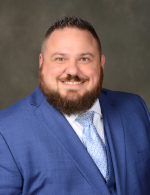
Carlo A. LaMonica
Moscow, Pennsylvania
5.0· 134
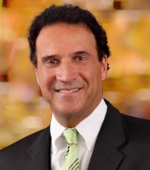
Jerry Robert Knafo
Allentown, Pennsylvania
5.0· 60

Jennifer Gilliland Vanasdale Esquire
Cranberry Township, Pennsylvania
5.0· 47

Gary Green
Philadelphia, Pennsylvania
5.0· 47

Michael Anthony O'Donnell
Kingston, Pennsylvania
5.0· 43