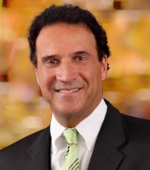
Robert A. Morton IV
AssociateatMarshall Dennehey
King Of Prussia, PA
Practicing animal law in King Of Prussia since 2014.
- 12+
- Years practicing
- 3
- Bar admissions
Are you Robert A. Morton IV?
This profile was built from public bar records and is still unclaimed. Claim it free to control your photo, bio, and fees — and get client inquiries sent straight to you.
Quick answer
Robert A. Morton IV is an associate based in King Of Prussia, PA. The practice focuses on Animal Law, Construction, and Construction. Robert has over 12 years of legal experience. Currently practicing at Marshall Dennehey.
- Based in
- King Of Prussia, PA
- Experience
- over 12 years
- Known for
- Animal Law · Construction · Construction
- Handles Animal Law, Construction, and Construction matters from King Of Prussia, PA.
- Over 12 years of practice as a licensed attorney.
About Robert A. Morton IV: Robert A. Morton IV is an associate based in King Of Prussia, PA. The practice focuses on Animal Law, Construction, and Construction. Robert has over 12 years of legal experience. Currently practicing at Marshall Dennehey.
Areas of practice
Practice focus
Robert A. Morton IV represents clients in King Of Prussia, Pennsylvania across the following areas of law. Each area links to other verified attorneys with the same focus.
Biography
About Robert A. Morton IV
Rob joined Marshall Dennehey as a member of the Casualty Department. He concentrates his practice in the areas of construction accident and construction defect litigation, premises liability, product liability, automobile and commercial motor carrier liability, and veterinary malpractice and licensure defense. Additionally, Rob has handled mold claims that were contained within larger construction-defect related claims.
Rob received his B.A. from Saint Joseph's University, where he was a member of the Dean's List, and graduated with a degree in Criminal Justice. Following graduation from college, he attended Widener University School of Law. While at Widener, Rob was actively involved in the Veteran's Law Clinic and worked in the Complex Litigation Center of the First Judicial District of Pennsylvania.
Prior to joining the firm, Rob worked for a regional defense firm. Rob is admitted to practice in Pennsylvania, New Jersey, and before the United States District Court for the Eastern District of Pennsylvania and U.S. Tax Court.
Results
Successful Trial Result Achieved in a Philadelphia Premises Liability Matter
We received a successful trial result in a premises liability matter in Philadelphia Court of Common Pleas. The plaintiff’s expert projected future surgeries and extensive life-long medical care costs of $1.25 million. Much of our defense centered on damages and demonstrating that the projected future medical care was not supported by the actual medical treatment provided. Additionally, video of the incident was used to demonstrate that the plaintiff had actual/constructive knowledge of spilled water in the premises but proceeded to walk in that area anyway. Forty percent comparative negligence was assigned to the plaintiff, and despite the plaintiff’s introduction of the medical cost projection described above, only $50,000 in future medical care was awarded by the jury. The total award, after a molded verdict, was $118,800, which our client viewed as a victory in this venue.
Defense Verdict Secured in a Seven-Day Defamation Jury Trial
We won a defense verdict in a seven-day jury trial in the Philadelphia Common Pleas court. The case involved a defamation claim based on an article published in a local community newspaper. The defendants were the local Community Council and the two individuals who wrote and published the article. According to the plaintiff, the article named him and implied he wrote an anonymous letter that threatened legal action, which was seen as contrary to the community’s interest. The demand had been $1.75 million, and the plaintiff was offered $50,000. After deliberating, the jury returned a verdict for the defendants.
Thought Leadership
Defense Digest
Shoddy Home-Improvement Contracting? Grounds for Recovering Treble Damages and Attorneys Fees under Pennsylvania Home Improvement Consumer Protection Act and Pennsylvania Unfair Trade Practices and Consumer Protection Law
June 1, 2023
Key Points:Trial courts are determined to protect the individual consumer from bad-acting contractors, including with the award of treble damages and attorneys fees under the HICPA and URPCPL.Home improvement contractors must ensure that they are familiar with the provisions of both HICPA and the UTPCPL and that they perform their home improvement renovations in a workmanlike manner.As home improvement projects have sky-rocketed in Pennsylvania in the COVID and post-COVID era, thanks to the continued “work from home” model or some form thereof, so have claims against home improvement contractors under both the Pennsylvania Home Improvement Consumer Protection Act, otherwise known as HICPA, and the Pennsylvania Unfair Trade Practices and Consumer Protection Law (UTPCPL).HICPA arose, at least in part, out of the need to protect consumers from unscrupulous home improvement contractors. To combat the deceptive practices of such actors, HICPA places certain requirements on these contractors, including that they register with the state, and dictates the terms and provisions which must be included in a contract with a homeowner, while also precluding certain terms and provisions that would act to limit a homeowner’s right to recover against such contractors.While the aim is to protect consumers, both HICPA’s and UTPCPL’s requirements can sometimes appear arbitrary and onerous to home improvement contractors. However, contractors must ensure compliance with the statutes, as violations of HICPA and/or UTPCPL, even for seemingly minor technical violations, can form the basis of an award of treble damages or attorneys fees. This article addresses certain scenarios under HICPA and the UTPCPL where Pennsylvania Courts have awarded treble damages or attorney fees for violations of the statutes.Per the UTPCPL, “unfair methods of competition” and “unfair or deceptive acts or practices in the conduct of any trade or commerce” are unlawful. 73 P.S. 201-3. “Unfair methods of competition” and “unfair or deceptive acts or practices” include, under 201-2(4)(xvi), “making repairs, improvements or replacements on tangible, real or personal property, of a nature or quality inferior to or below the standard of that agreed to in writing.” Additionally, any violation of the HICPA is deemed a violation of the UTPCPL. 73 P.S. 517.10. Any person who purchases services for personal, family, or household purposes and thereby suffers any ascertainable loss of money or property, real or personal, as a result of an unlawful act under UTPCPL may bring a private action to recover actual damages. 73 P.S. 201-9.2(a). Additionally, the court may, in its discretion, award up to three times the actual damages sustained and may provide such additional relief as it deems necessary or proper. A trial court has broad discretion to award treble damages for any violation of the UTPCPL, including violations of the HICPA. Johnson v. Hyundai Motor America, 698 A.2d 631, 639-640 (Pa. Super. 1997). An abuse of discretion may not be found merely because an appellate court might have reached a different conclusion, but requires manifest unreasonableness, or partiality, or ill-will, or such lack of support so as to be clearly erroneous. Grady v. Frito-Lay, Inc., 839 A.2d 1038, 1046 (Pa. 2003). The court’s discretion as to treble damages under the UTPCPL should not be closely constrained by the common-law requirements associated with the award of punitive damages. Schwartz v. Rockey, 932 A.2d 885, 898 (Pa. 2007). Nevertheless, the discretion of courts of original jurisdiction is not limitless, and awards of treble damages may be reviewed by the appellate courts for rationality. Courts of original jurisdiction should focus on the presence of intentional or reckless, wrongful conduct as to which an award of treble damages would be consistent with, and in furtherance of, the remedial purposes of the UTPCPL. In actions for violations for the UTPCPL, the court may award to the plaintiff, in addition to other relief, costs and reasonable attorneys fees. 73 P.S. 201-9.2(a). The trial court has discretion in awarding attorneys fees, and an appellate court will not disturb such an award unless the trial court abuses that discretion. Skurnowicz v. Lucci, 798 A.2d 788, 796 (Pa. Super. 2002) (superseded on other grounds). In exercising its discretion, the trial court must consider: (1) the time and labor required, the novelty and difficulty of the questions involved and the skill requisite properly to conduct the case; (2) the customary charges of the members of the bar for similar services; (3) the amount involved in the controversy and the benefits resulting to the client or clients from the services, and (4) the contingency or certainty of the compensation.Neal v. Bavarian Motors, Inc., 882 A.2d 1022, 1030-31 (Pa. Super. 2005).The trial court must link the fee award to the amount of damages the plaintiff sustained under the UTPCPL and eliminate from the award of attorneys fees the efforts of counsel to recover on non-UTPCPL theories. Courts have acknowledged the difficulty of parsing out the time between UTPCPL claims and other causes of action where plaintiffs are proceeding on multiple theories of relief. See e.g. Krishnan v. Culter Group, Inc., 171 A.3d 856 (Pa. Super. 2017); Boehm v. Riversource Life Inc. Co., 117 A.3d 308 (Pa. Super. 2015).In addition, a strict liability standard is now applied to all claims brought under the “catch-all” provision of the UTPCPL for conduct that has the potential to deceive a consumer. As a result, courts may impose an award of treble damages and attorneys fees for such a violation even without considering the state of mind of the actor.The following summarizes a few factual scenarios that have warranted awards of treble damages or attorneys fees in UTPCPL and/or HICPA cases.In Brandt v. Master Force Construction Corp., 236 A.3d 1112 (Pa. Super. 2020), the homeowners contracted with a home improvement contractor to replace a roof. However, the roof leaked after replacement. After the contractor claimed to have fixed the leak, the leaks persisted, and the homeowners decided to hire another contractor to actually fix the leaky roof. The Pennsylvania Superior Court ultimately upheld a trial court’s award of treble damages and attorneys fees because the court applied the Neal factors and only awarded fees and expenses for which counsel had prepared invoices and which Plaintiffs had actually paid.In Bennett v. A.T. Masterpiece Homes at Broadsprings, LLC, 40 A.3d 145 (Pa. Super. 2012), the buyers of a newly-constructed home were guaranteed by the builders that the roof, flooring, and foundational issues would be fixed, but issues persisted after construction was completed. The trial court ultimately awarded the plaintiffs double damages, and the appellate court found such award was soundly within the discretion of the trial court based on violation of the UTPCPL. In Krishnan, supra, home purchasers discovered chronic water infiltration issues due to construction failures committed by the defendant home builder. The trial court awarded attorneys fees, expert fees, and related costs. All were upheld.In short, it is apparent that trial courts are determined to protect the individual consumer from bad-acting contractors, including with the award of treble damages and attorneys fees. Appellate courts will uphold such awards absent a significant overreach by the trial court. With that in mind, home improvement contractors must ensure that they are familiar with the provisions of both HICPA and the UTPCPL and that they perform their home improvement renovations in a workmanlike manner. Defense Digest, Vol. 29, No. 2, June 2023, is prepared by Marshall Dennehey to provide information on recent legal developments of interest to our readers. This publication is not intended to provide legal advice for a specific situation or to create an attorney-client relationship. ATTORNEY ADVERTISING pursuant to New York RPC 7.1. 2023 Marshall Dennehey. All Rights Reserved. This article may not be reprinted without the express written permission of our firm. For reprints, contact tamontemuro@mdwcg.com.
News
Marshall Dennehey Announces 2026 Shareholder Class and Special Counsel Promotions
December 15, 2025
Credentials
Education
Widener University School of Law
J.D. · 2014
St. Joseph’s University
B.S. · 2011
Jurisdictions
Bar admissions
U.S. District Court
2018 · ACTIVE
New Jersey
2015 · ACTIVE
Pennsylvania
2014 · ACTIVE
Affiliations
Professional memberships
American Bar Association Pennsylvania Bar Association
membership
Locations
Office locations
Marshall Dennehey
620 Freedom Business Center, Suite 300
King Of Prussia, PA 19406
Open in Google MapsClient feedback
Client reviews
No reviews yet
Only verified clients who have consulted with Robert A. Morton IV can leave a review.
Schedule your consultationFrequently asked
Common questions
What areas of law does Robert A. Morton IV practice?
Robert A. Morton IV focuses on Animal Law, Construction, Construction, General, and Product Liability.
Where is Robert A. Morton IV located?
Robert A. Morton IV primarily serves clients in King Of Prussia, Pennsylvania, with an office at 620 Freedom Business Center, Suite 300.
How experienced is Robert A. Morton IV?
Robert A. Morton IV has 12 years of legal practice, having been licensed since 2014.
Is Robert A. Morton IV a verified attorney?
Robert A. Morton IV's profile is listed but has not yet been claimed by the attorney. Verification status is pending.
How can I schedule a consultation with Robert A. Morton IV?
You can book a consultation through LawyersListed directly from this page. Initial outreach can also be made by phone at 610-354-8291.
More counsel